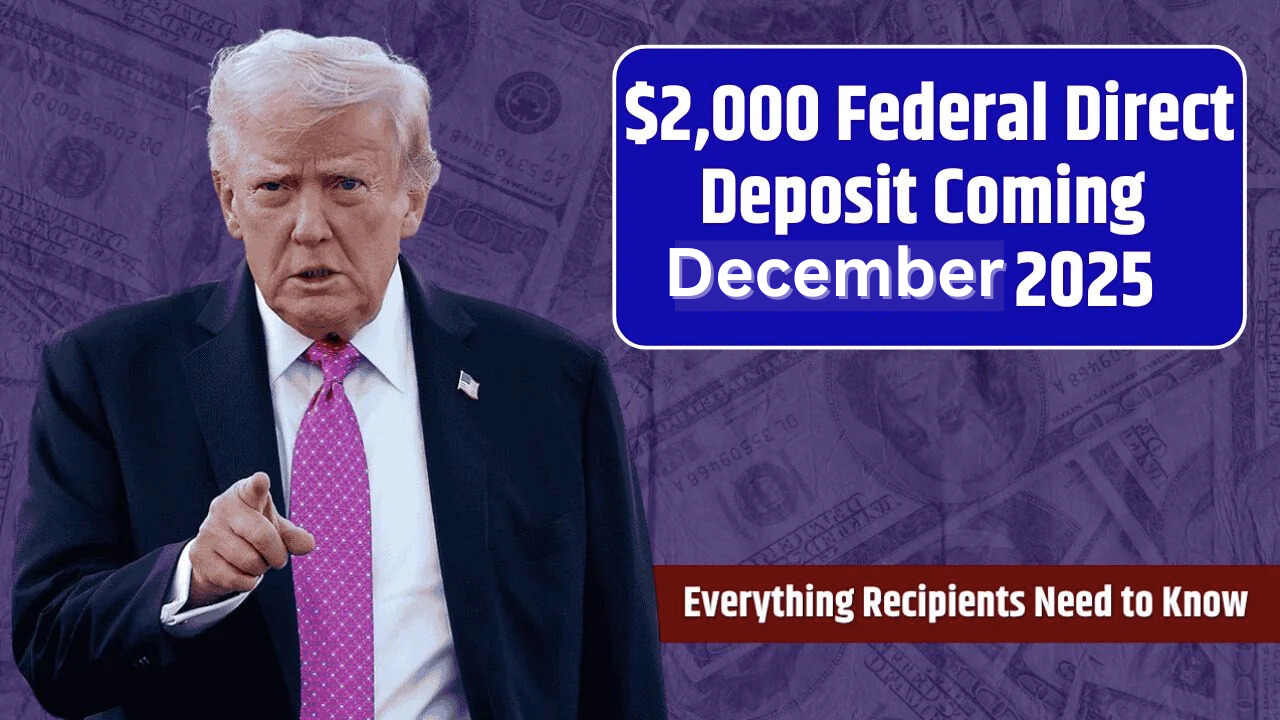
$2,000 Direct Deposit:As 2025 draws to a close, many Americans are seeking some relief from rising prices, holiday expenses, and the constant challenge of making ends meet. That’s why the growing buzz about a $2,000 federal direct deposit payment arriving in December 2025 has sparked renewed hope for millions. While federal confirmation is still pending, the buzz itself has generated a wave of hope—because for many families, this kind of financial assistance at the end of the year could truly make a difference.
Here’s a heartfelt, human look at everything you need to know about the proposed December payments: who can qualify, when the money might arrive, and what the IRS expects from eligible citizens.
$2,000 Federal Direct Deposit Payment Coming in December 2025 — The Complete Guide for Americans
Why this payment is so important right now
Inflation isn’t over yet. Groceries are still expensive, rent is rising, and even everyday items like utilities and transportation are taking up a significant portion of household budgets. For parents, seniors, retirees, and paycheck-to-paycheck workers, a $2,000 direct deposit could be a way to pay bills, buy holiday gifts without stress, or save money for the end of the year.
That’s why this proposal—whether finalized or still being formulated—has attracted so much attention. It offers relief, stability, and hope at a time when many Americans truly need it.
Eligibility Criteria for the Proposed December 2025 Payment
While the federal government has not yet given final approval, most proposals suggest similar eligibility rules. Here’s what is expected:
1. Must Be a U.S. Citizen or Legal Resident
Only documented U.S. citizens or qualifying residents would be eligible for the payment.
2. Income Limits (Expected)
As with earlier federal payments, income thresholds may include:
-
$75,000 or less for single filers
-
$150,000 or less for married couples filing jointly
-
$112,500 or less for heads of households
Citizens earning above these limits may still qualify but at a reduced payment amount.
3. Recent Tax Filing Required
Eligibility typically depends on having filed a 2024 or 2025 federal tax return. This ensures the IRS has updated information such as income, bank details, and dependent count.
4. Dependents May Increase the Payment
Households with children or other dependents could receive additional amounts—though the exact figure will depend on the final rules set by Congress or the Treasury.
5. Social Security, SSI, SSDI, and VA Beneficiaries
Historically, federal relief programs have included seniors, individuals with disabilities, and veterans. If this payment is approved, it is likely that the IRS will issue deposits automatically using the payment information already on file.
Expected Payment Dates for December 2025
No official date has been confirmed yet, but based on previous payment schedules, here’s an expected timeline:
Early December 2025
The IRS may begin issuing public guidance and confirming eligibility criteria.
December 10–17
The first wave of direct deposits may reach bank accounts. These typically go to taxpayers who already set up direct deposit through their latest tax return.
December 18–22
The second wave of payments may be distributed to additional eligible taxpayers, including those whose returns required additional verification.
Late December
Paper checks and EIP-style debit cards may be mailed to those who don’t have bank accounts on file.
This multi-phase schedule helps the IRS efficiently manage millions of payments.
IRS Instructions for Citizens
Even though final approval is still pending, citizens can prepare by following these simple steps:
1. File your taxes on time
If your 2024 or 2025 tax return hasn’t been filed, the IRS won’t have enough information to verify your eligibility or send your payment.
2. Update your direct deposit information
If your bank account has changed, update it with the IRS—otherwise, your payment may be delayed or mailed as a check.
✔ 3. Keep your mailing address current
Paper checks and debit cards are sent to the address on record, so make sure your address is correct.
4. Monitor official IRS announcements
Avoid social media scams. The IRS never asks for fees, passwords, one-time codes, or “applications” for relief payments.
5. Monitor IRS.gov
All genuine updates will come directly from the IRS or U.S. Treasury—not from unofficial websites or viral posts.
FAQs
Q 1: Has the $2,000 December 2025 payment been officially approved?
Not yet. It is still a proposal, though it is receiving significant attention.
Q 2: Will every U.S. citizen get the full $2,000?
No. Eligibility is expected to depend on income, tax filing, and residency status.
Q 3: Do I need to apply for the payment?
No. If approved, the IRS will issue payments automatically, similar to past relief checks.
Q 4: Will seniors on Social Security qualify?
Most likely, yes—if their information is already on file with the IRS.
Q 5: What if I don’t have a bank account?
The IRS may send a paper check or an EIP-style debit card by mail.
Q 6: Can this payment still change?
Yes. Amounts, eligibility, and delivery dates depend on final legislation.
Final Thoughts
The idea of a $2,000 direct deposit in December 2025 offers good hope for millions of hardworking Americans. While it’s not yet finalized, preparing in advance—filing taxes, updating bank details, and staying alert for IRS announcements—can help ensure you’re ready if relief becomes official. If you’d like, I can create a short news story, headline variation, or social media post on this topic.
