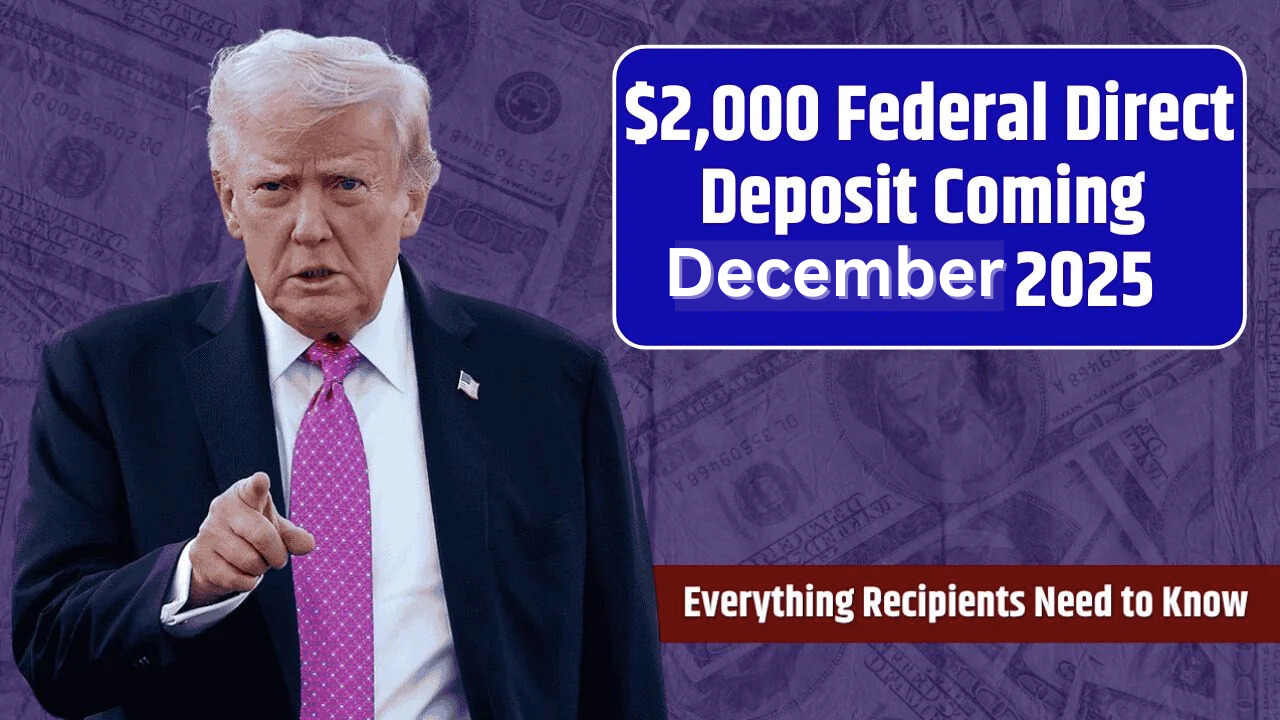
Federal $2,000 Deposit:As 2025 draws to a close and households grapple with high grocery prices, rising rents, and increased medical expenses, millions of Americans are finally getting some good news. A federal $2,000 deposit has been approved for release in December 2025, providing timely financial assistance to eligible individuals and families. For many, this payment comes at the perfect time—right before the holidays, when expenses tend to rise sharply.
While this payment isn’t a monthly stimulus, it serves as a one-time relief, aimed at mitigating inflationary pressures and helping Americans manage essential needs. If you’re wondering who qualifies, when the deposit will arrive, or how to make sure you’re included, this complete guide explains everything in simple, easy-to-understand language.
Why the Federal Government Approved the $2,000 Payment
Throughout 2025, many families reported tight budgets and increased financial instability. Rising living costs are impacting middle- and low-income groups the most, so federal agencies have focused on a temporary relief program to help Americans make ends meet.
The purpose of the $2,000 deposit is to:
- Help families facing inflation
- Help seniors, veterans, and low-income families
- Help working Americans manage year-end expenses
- Provide temporary stability during economic disruptions
While it’s not as extensive as previous stimulus programs, the December payment provides job support at a time when many families truly need it.
Who Is Eligible for the $2,000 Federal Deposit?
Eligibility is fairly wide, but not everyone qualifies. To receive the payment, beneficiaries must meet the following conditions:
1. Income Limits Apply
Your Adjusted Gross Income (AGI) on your 2024 tax return must fall within:
-
$75,000 or below for single filers
-
$112,500 or below for heads of household
-
$150,000 or below for married couples filing jointly
Those earning above these limits may receive a reduced amount through a phase-out structure.
2. Must Have Filed a 2024 Return
The IRS uses your most recent tax filing to determine:
-
Income
-
Household structure
-
Banking information
-
Eligibility status
If your 2024 return isn’t filed, the payment cannot be issued in December.
3. Valid Citizenship or Legal Residency
Eligible beneficiaries must be:
-
U.S. citizens, or
-
Legal residents with a valid Social Security Number or ITIN
4. Beneficiaries of Federal Programs May Qualify
Recipients of the following may qualify if income rules are met:
-
Social Security (SSA)
-
SSI
-
SSDI
-
VA benefits
-
Railroad Retirement
However, the payment is not automatic for these groups—it is based on tax filings.
Payment Schedule: When will the money arrive?
The government has created a staggered schedule to ensure smooth distribution and avoid IRS processing delays.
December 18, 2025 – First Release
Deposited to:
- People with direct deposit on file
- Early filers
- Senior beneficiaries whose benefits are already linked to updated IRS banking information
These recipients will see the deposits first.
December 20–23, 2025 – Second Wave
Sent to:
- Most taxpayers
- Working families
- Filers whose returns have been processed and have no discrepancies
This is expected to be the largest batch.
December 27, 2025 – Final Direct Deposit
Will be issued to:
- Those whose bank details have recently been updated
- Taxpayers who have been flagged for minor verification
Those who filed returns at the end of 2024
December 30, 2025 – January 6, 2026 – Paper Checks
Will be sent to:
- Those who do not have direct deposit
- Families whose bank accounts are invalid
- Senior citizens who prefer physical checks
Holiday mail delays may impact some people’s arrivals.
How to Ensure You Receive Your Payment
To avoid last-minute hassles, beneficiaries should:
Update your banking information
If your account has changed this year, update it through the IRS online portal.
File any missing 2024 taxes
Missing tax returns are the most common reason people don’t receive federal payments.
Respond to any IRS notices
Identity or income verification issues can delay your payment until the final stage.
Is the $2,000 payment taxable?
No. The payment is not taxable and does not affect:
- SNAP
- Medicaid
- Social Security benefits
- Housing assistance
- Refunds
- Tax credits
It is considered non-income financial relief.
FAQs
1. Do seniors automatically qualify?
No. Seniors must meet income limits and have a filed 2024 tax return.
2. Will dependents receive their own payment?
No. The $2,000 is for eligible adults only.
3. Can non-filers get the payment?
Yes, but only after filing their 2024 tax return.
4. What if I do not receive the payment in December?
You can claim it as a Recovery Rebate Credit on your 2025 tax return.
5. Does the payment reduce my refund?
No. It has no impact on future refunds or credits.
